 Videos
 Photos


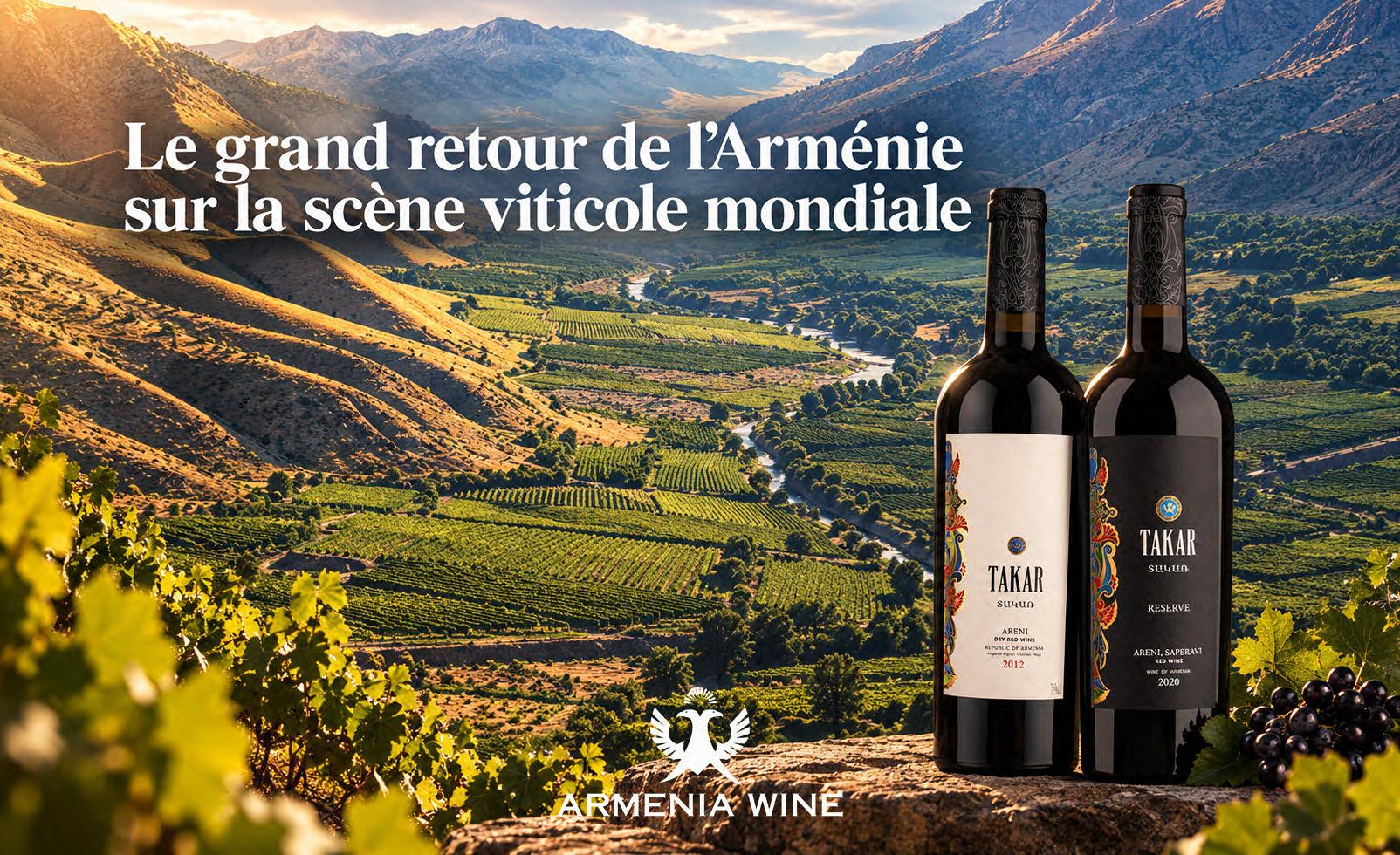
Armenia’s Return to the Global Wine Map: Le Figaro’s Coverage of Armenia Wine Company
Paid content
The authoritative French publication Le Figaro has addressed the revival of Armenian winemaking in an article titled “Armenia’s Great Return to the Global Winemaking Stage.”
Journalist Stéphane Reynaud presents Armenia as a country with a millennia-old history of winemaking that today seeks to turn its ancient heritage into an important advantage for modern winemaking.
The article devotes particular attention to Armenia Wine Company, which is presented as one of the leaders of the country’s winemaking sector. Founded by Vahagn Mkrtchyan and Vardges Vardanyan, who achieved success in the technology sector, the company today produces around 8 million bottles annually. The company has also opened the first wine history museum in Armenia, where the origins and historical heritage of Armenian winemaking are presented in a contemporary format.
According to Le Figaro, the development of the sector in recent years has been significant: in just seven years, the number of Armenian wine labels has increased from 35 to 165. The new generation of producers places emphasis on local varieties, quality, and the history of Armenian origin.
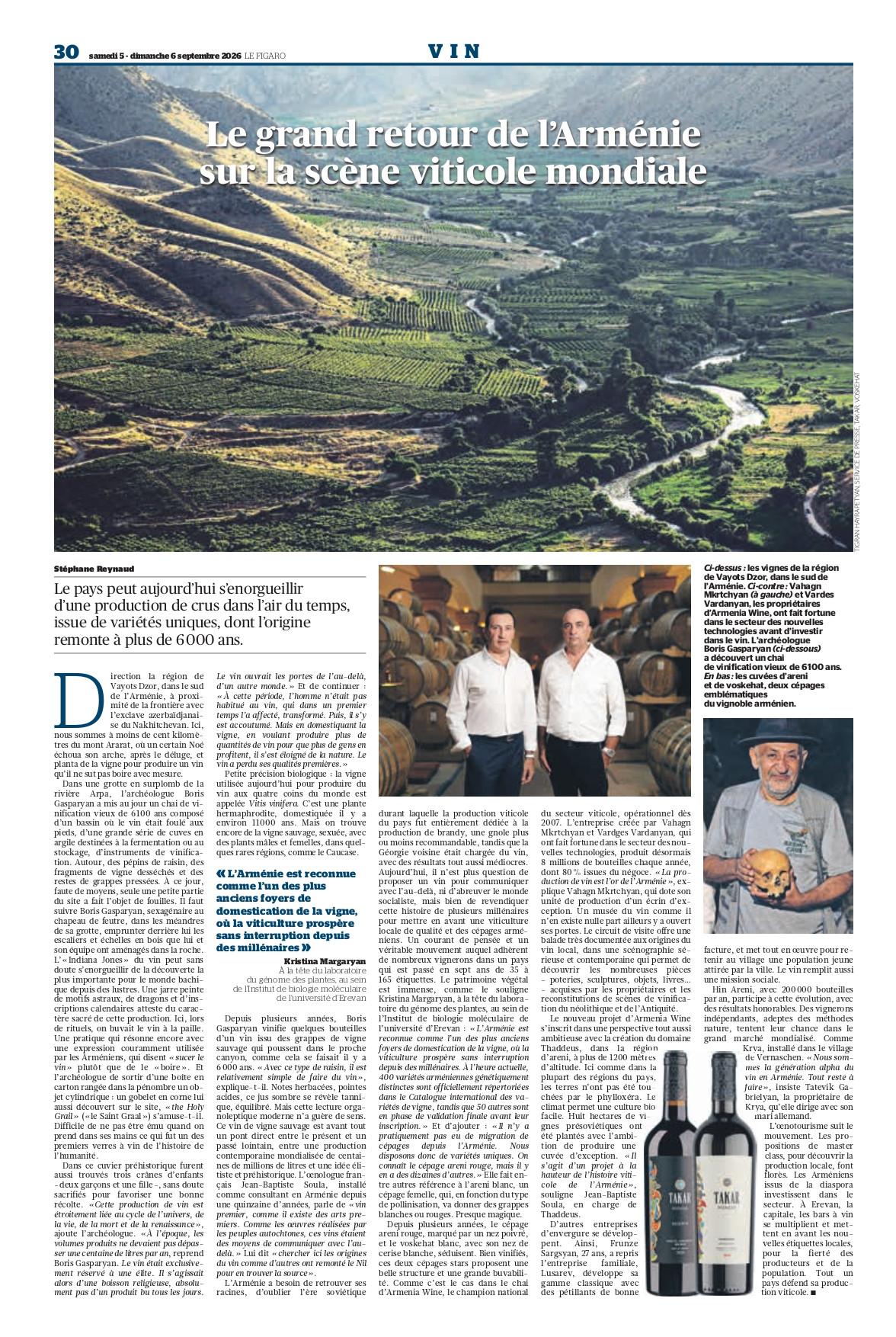
The French publication pays special attention to Armenia’s unique genetic heritage of grape varieties. According to Kristina Margaryan, Head of the Plant Genome Laboratory at the Institute of Molecular Biology of Yerevan University, Armenia is considered one of the ancient centers of grape domestication. Today, 400 genetically distinct Armenian varieties are officially registered in the international catalogue, while around 50 more are in the process of approval. The article particularly highlights the red Areni and the white Voskehat, which have already become symbols of modern Armenian winemaking.
At the heart of the article are Vayots Dzor and the Areni Cave, where, under the leadership of archaeologist Boris Gasparyan, a wine production facility dating back around 6,100 years was discovered. A grape-pressing basin, clay vessels, grape seeds, and remains of grape clusters have been preserved there. Le Figaro presents this discovery not only as an Armenian but also as an exceptional testimony to the history of global winemaking. The article also emphasizes that at that time wine was not an everyday beverage: it was intended mainly for the elite and for ritual ceremonies, symbolizing the connection between life, death, and the afterlife.
The main message of Le Figaro’s article is clearly formulated: Armenia is not simply trying to become a new winemaking country, but is returning to a field of which it is itself one of the historical origins. More than 6,000 years of heritage, hundreds of local grape varieties, and the ambitions of a new generation of producers today give Armenia the opportunity to once again appear on the global wine map, this time as a modern and distinctive winemaking country.
Write a comment