 Videos
 Photos


MSF Launches MDR Tuberculosis Program in Yerevan
Onnik Krikorian
At a Press Conference held today in the Armenian capital, the French wing of the International Medical Organization, Médecins Sans Frontières (MSF), announced a new $3.8 million program to address the growing problem of Multi Drug Resistance Tuberculosis (MDR) in the Armenian capital.
Although MSF consider that the problem of Tuberculosis is the responsibility of the health authorities in the Republic, a Memorandum of Understanding between the organization and the Ministry of Health of the Republic of Armenia and the Mayor's Office of Yerevan was signed on 19 October 2004.
Multi Drug Resistant (MDR) Tuberculosis is a form of the disease resistant to the two most common drugs used in its treatment, Rifampicin and Isoniazid. However, because of MSF's experience in treating 20,000 TB patients globally per year, the organization believes that it can address the problem in Armenia.
According to MSF, there are annually between 250,000 to 400,000 new cases of Multi Drug Resistant (MDR) Tuberculosis reported throughout the world and in Armenia, as many as 15% of all cases of Tuberculosis might be MDR. From 1997 to 2002, MSF realized a similar program in Stepanakert, capital of the Republic of Nagorno Karabagh , and the main objective of the program in Yerevan will be to treat patients free of charge.
MSF will also rehabilitate and re-equip special laboratories and ambulatory rooms in polyclinics situated in the Malatia-Sebastia ( Bangladesh ) and Shengavit districts of Yerevan as well as diagnostic departments in two tuberculosis dispensaries. A special department for the treatment of MDR Tuberculosis will be established jointly with the Ministry of Health in the Republican Tuberculosis Dispensary situated in Abovian.
Additionally, during this new four year programme that is scheduled to run until 2008, MSF will provide specialized training for medical personal. After construction and rehabilitation work is complete, MSF anticipates treating the first patients in February or March next year. Social and psychological support for patients and their families will also be provided as part of the programme.
According to the Ministry of Health there are 6,000 cases of Tuberculosis in Armenia but the actual number is thought to be much higher. As a result, Christian Ferrier, the current Head of Mission for MSF (France) says that a survey will also be conducted during 2005 to form a clearer picture of the problem.
Regardless, with many families in Yerevan still living in poor and cramped conditions and with a general deterioration in health especially among those living below the national poverty line, there is no doubt that Tuberculosis and MDR are serious problems that have so far received little attention.
"In resource-poor countries like Armenia it is impossible to cure people infected with multi-resistant tuberculosis. That is why we have decided to embark on the implementation of this program," Ferrier told journalists present at the press conference.
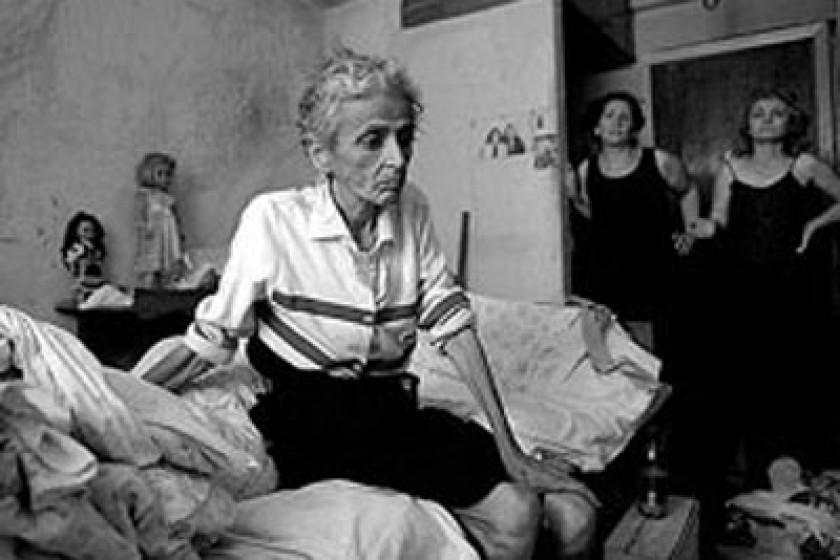
In the past two years, for example, Hetq has encountered numerous TB sufferers in Yerevan , including one that recently died through lack of treatment (pictured above) and is currently investigating at least one case of corruption associated with the treatment of TB under the Government's three-year anti-TB plan of action.
There have also been recent concerns raised during research for other articles regarding cases of tuberculosis among children from vulnerable families. As a result, Hetq will be reporting on the problem of tuberculosis in the coming weeks and months as part of its continuing coverage of issues related to social vulnerability in Armenia.
Write a comment