 Videos
 Photos


Armenia Sets 2027 Start for “Academic City” Student Housing Amid Ongoing Scrutiny Over $3 Billion Megaproject
YEREVAN — Design and construction work for modern housing accommodating 3,600 students will launch in 2027 as the first phase of Armenia’s flagship “Academic City” project, according to the Ministry of Education, Science, Culture, and Sports (MESCS).
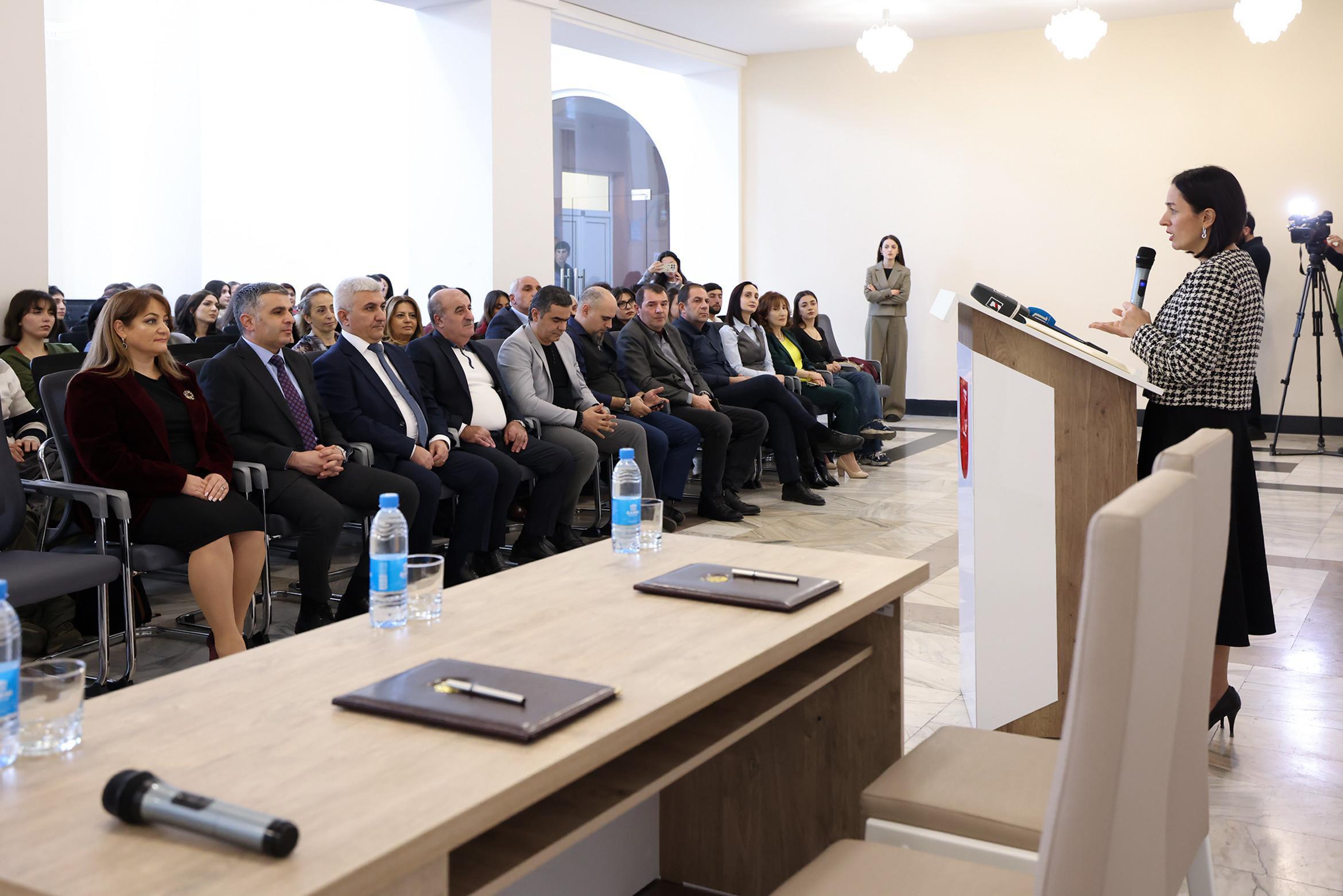
The timeline was announced during a ceremony hosted at the National University of Architecture and Construction of Armenia (NUACA) on International Students' Day (November 17), where the MESCS Higher Education and Science Committee and NUACA signed a memorandum of understanding. Alongside standardized student residences, the initial phase will include a technology cluster and supporting engineering infrastructure.
The Academic City is slated to span roughly 700 hectares on the northwestern outskirts of Yerevan. Situated at the intersection of the Armavir, Aragatsotn, and Kotayk provinces, the site represents a shift from the government's initial 2022 proposal to build the complex further northwest in Ashtarak.
Speaking at NUACA, Education Minister Zhanna Andreasyan stated that the student residences will open ahead of the broader campus launch to relieve housing pressure caused by rising Yerevan rental prices, particularly for students traveling from Armenia’s provinces. Signed by Acting Committee Chair Lilit Mkrtchyan and NUACA Rector Manuk Barseghyan, the agreement taps NUACA’s academic expertise to design the residences while giving architecture and engineering students hands-on training on the project. NUACA previously participated in drafting the broader master plan for the Academic City, which aims to relocate higher education institutions out of central Yerevan.
While officials frame the housing rollout as a student-centered milestone, previous investigations and reporting by Hetq have highlighted persistent questions surrounding the project’s financing, scientific vision, and governance:
- Unclear $3 Billion Financing. Hetq reported that the megaproject—targeted for 2030 completion to consolidate state and private universities—carries an estimated $3 billion price tag, with officials yet to finalize clear funding mechanisms beyond potential state borrowing, international leases of existing Yerevan university buildings, and hoped-for private investment.
- Pushback from Armenia’s Science Sector. According to Hetq’s coverage, the Gituzh (Power of Science) coalition of tech entrepreneurs and researchers criticized the initiative as lacking clear scientific priorities, arguing that constructing new buildings will not resolve systemic gaps in Armenia’s research and innovation ecosystem.
- Promotional Spending Before Core Design. Investigative reporting by Hetq revealed the government spent roughly $400,000 on nationwide public outreach campaigns—including regional meetings and social media videos—without clear impact metrics, drawing scrutiny while fundamental questions over budgets and implementation stages remained unresolved.
- Concerns Over Institutional Autonomy. In Hetq’s reporting on higher education reforms, academics warned that government plans to merge state universities from twenty-three down to six and relocate them to the Academic City—paired with political appointments to university boards of trustees—risk eroding institutional autonomy and academic freedom.
Write a comment