 Videos
 Photos


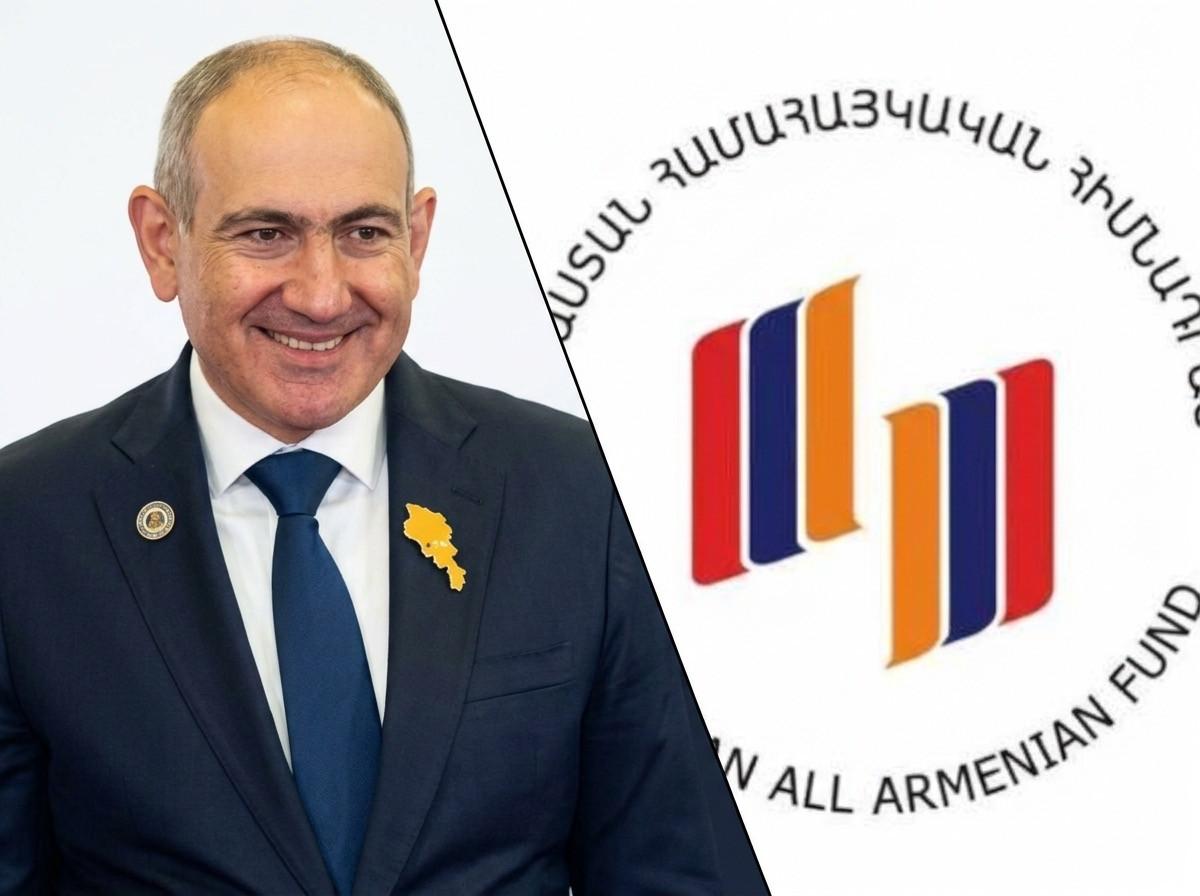
From Charity to Statecraft: Pashinyan’s ‘Real Armenia’ Framework Sparks Radical Pivot and Controversy on the Pan-Armenian Fund’s 35th Anniversary
In a video interview released on October 14, 2026, marking the 35th anniversary of the Hayastan All-Armenian Fund, Prime Minister Nikol Pashinyan used the occasion to tightly weave the Fund's future into his controversial "Real Armenia" policy framework. This speech, combined with the recent systemic overhauls enacted by the Fund's leadership, signals a massive geopolitical and ideological shift in how the state handles diaspora-funded initiatives.
The Framework: Territorial Realignment & "Real Armenia"
Pashinyan used the public address to re-state that the ultimate guarantor of Armenia’s future is a finalized peace agreement with Azerbaijan built strictly around the 1991 Alma-Ata Declaration, preserving exactly 29,743 square kilometers of sovereign Armenian territory.
- Border Demarcation: He explicitly argued for a clean, pragmatic settlement where no enclaves or exclaves remain on either side of the border. He championed territorial exchanges of identical sizes to secure predictable transport routes.
- Forward-Looking Ideology: He asserted that the nation must define its path "not by what has already occurred, but by what is yet to unfold," explicitly warning against using historical patterns as an excuse to repeat past geopolitical mistakes.
The Fund's Evolution: From "Survival" to "State-Building"
When addressing the 35-year legacy of the "Hayastan" Fund, Pashinyan called for a structural pivot away from historical diaspora-led charity and toward legal statecraft.
- The Pivot to Infrastructure: He noted that while the Fund was born out of 1990s emergency survival—recovering from a devastating earthquake, war, and economic collapse—its modern iteration must fund institutional growth. He advocated for long-term internal upgrades (e.g., local water mains, schools, municipal infrastructure) over ideological projects.
- "State vs. Homeland" Concept: Pashinyan critiqued the diaspora's traditional emotional attachment to a romanticized "Homeland," arguing instead that contributions must systematically serve the legally defined, physical Republic of Armenia.
The Response from the Board of Trustees
The Board of Trustees anticipated and structurally mirrored Pashinyan's core messaging during their recent institutional overhauls.
- Approval of the Strategic Shift: Led by Board Chairman and President of Armenia Vahagn Khachaturyan, along with Pashinyan and other key state ministers, the Board officially approved a new three-year strategic development strategy.
- A Move from Reactive to Strategic: Presented by the newly elected Executive Director, Aramayis Avetisyan, the Board's approved roadmap directly aligns with the administration's push to move the fund "from a reactive approach towards long-term strategic planning."
- Focus Areas: The Board formalized a structure based on four pillars: strategic development, organizational efficiency, enhancing financial transparency, and modernizing the Armenia-Diaspora cooperation ecosystem.
Critique of the Fund & Pashinyan's Diaspora Views
While the administration and the Board frame this transition as a necessary modernization, Pashinyan's rigid approach toward the Diaspora has drawn sharp criticism from opposition figures, community leaders, and traditional diaspora institutions:
The Trust Deficit & the 2020 War Controversy
The foundational critique of the Fund under the current government stems from the 2020 Artsakh (Nagorno-Karabakh) War, during which the Fund raised over $160 million. The Pashinyan administration transferred a massive portion of these donation funds directly into the state budget. Critics and diaspora donors frequently blast this move as a breach of trust, arguing it severely damaged the Fund's credibility and institutional transparency.
Erasure of Pan-Armenian Cohesion
By continuously demanding that the Diaspora detach its funding from Nagorno-Karabakh or pan-Armenian nationalist concepts, critics accuse Pashinyan of alienating the exact demographic he relies on for financial capital. Opponents argue that reducing the Diaspora's role to that of a utility-funding entity strips away the emotional and historical cohesion that drives global Armenian fundraising.
Framing the Diaspora as Anachronistic
Pashinyan’s rhetoric has frequently been critiqued as condescending toward traditional diaspora structures. His "Real Armenia" framework effectively frames traditional diaspora patriotism as an outdated mechanism that courts conflict with neighbors rather than pursuing realistic peace. Critics contend that instead of building a true bridge, this approach splits the Armenian identity into two separate, opposing camps: the pragmatic residents of the Republic versus the ideological spectators of the Diaspora.
Write a comment