 Videos
 Photos


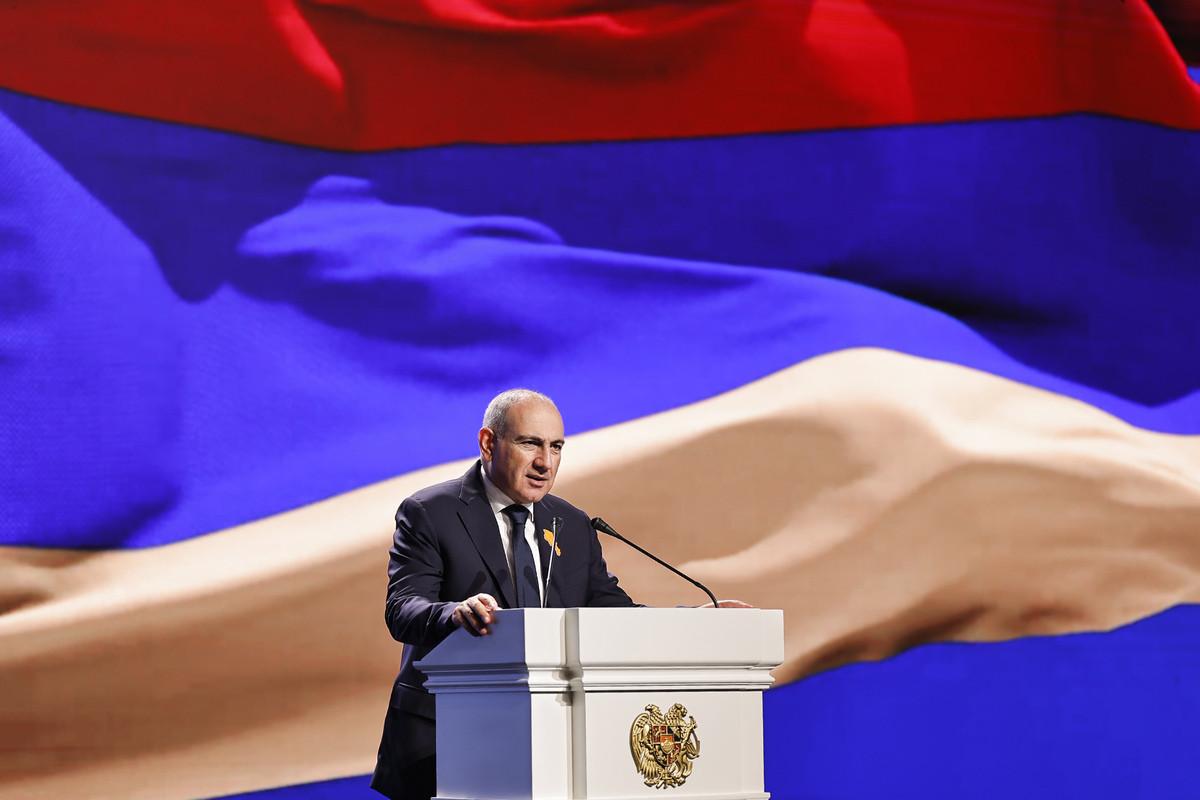
Pashinyan Declares Republic of Armenia ‘The Promised Land Bestowed by God’ Amid Rising Church-State Tensions
YEREVAN — In a speech heavily laced with biblical rhetoric, Prime Minister Nikol Pashinyan declared the modern Republic of Armenia as “our Promised Land bestowed by God” during the country's second annual Prayer Breakfast today.
Addressing an audience of high-ranking statesmen, business leaders, and international diplomats, Pashinyan framed his political vision of a “Real Armenia” as the ultimate expression of the country's Christian identity. The prime minister opened his remarks by quoting the biblical Book of Proverbs—the historical first text translated into the Armenian language following the creation of its alphabet by Mesrop Mashtots.
"God resides within every person... but God truly dwells within the people, for the people constitute the magnitude capable of encompassing God," Pashinyan told attendees. "Perhaps this is the foundation upon which we can build a value-based state and a value-based society."
Pashinyan further argued that personal faith serves as a critical mechanism for governance and anti-corruption. He asserted that a "judge who believed in God would be fair and that only then would the judge deliver just verdicts," adding that every Armenian citizen should believe in God.
The event, which began with an opening prayer by Archbishop Kevork Noradounguian of the Armenian Catholic Church, also featured a headline address from Paula White-Cain, Senior Advisor to the White House Office of Faith and Opportunity Initiatives.
A Constitutional Paradox
Pashinyan’s highly religious pronouncements have drawn immediate scrutiny, highlighting a growing paradox in Armenian governance. Under Article 17 of the Constitution of Armenia, the republic is strictly defined as a secular state where religious organizations must remain separate from the government.
However, Pashinyan’s rhetoric leans heavily on Article 18 of the constitution, which recognizes the "exclusive mission of the Armenian Apostolic Holy Church, as a national church" in preserving the country's national identity.
Coinciding with Armenia's National Minorities Day, Pashinyan sought to balance his Christian-centric rhetoric by emphasizing religious pluralism. While acknowledging that the vast majority of citizens adhere to the Armenian Apostolic Church, he noted that the state protects the freedom of Christian minorities—such as Catholics and Evangelicals—as well as non-Christian minority groups, including Yazidis, Kurds, Jews, and Russians.
According to Pashinyan, the prayer breakfast provides a unique format where "everyone speaks about their own understanding of God... and this is the place where solidarity can exist."
Behind the Rhetoric: A Polarized Showdown
Despite Pashinyan’s overt overtures to Christian values, the speech comes amid an unprecedented and highly polarized legislative showdown between his administration and the leadership of the Armenian Apostolic Church.
While Pashinyan frequently invokes his personal Orthodox Christian faith through a spiritual lens, his government has simultaneously launched an aggressive campaign to overhaul the ancient national church's hierarchy.
The administration's efforts to forcibly reform church leadership have triggered immense domestic backlash, with critics accusing the prime minister of weaponizing religious language to appeal to traditional voters while systematically violating the constitutional separation of church and state.
Write a comment