 Videos
 Photos


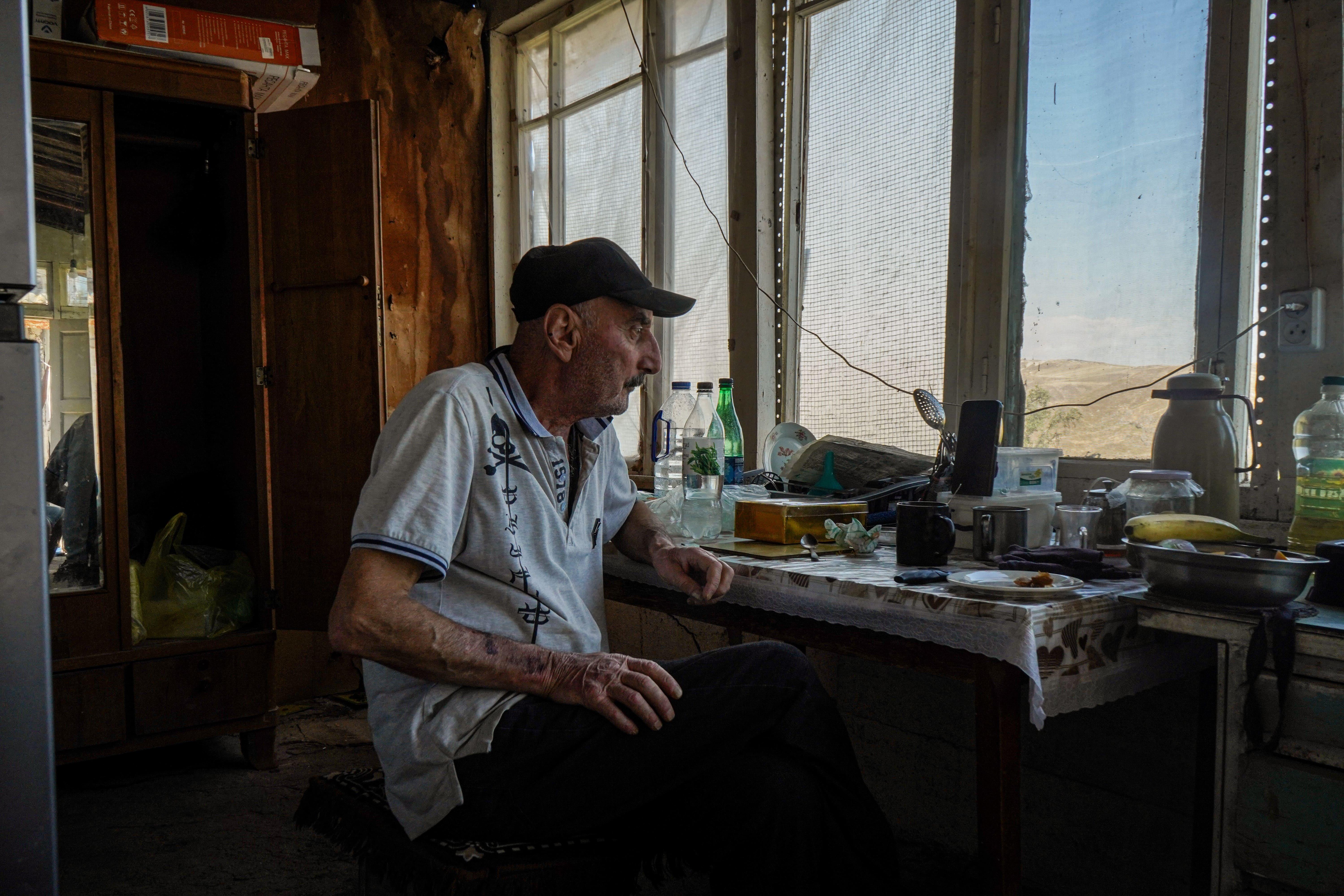
1990s Artsakh War Vet Vows: "One Day I'll Run All the Way to Stepanakert"
By Mattis Choquart (Hetq intern)
"Why here, in Tegh? So that when they take Stepanakert back, I can run there on foot. I want to be close. I want to be the fastest to get there."
Shoemaker recalls the good life in Stepanakert
Before allowing himself to be photographed, Arsen Dinunts brushes away the flies from his shirt.
"They were in the way," he says. "Otherwise, it's shameful." Then he gathers up what he has on the table in case anyone wants to eat.
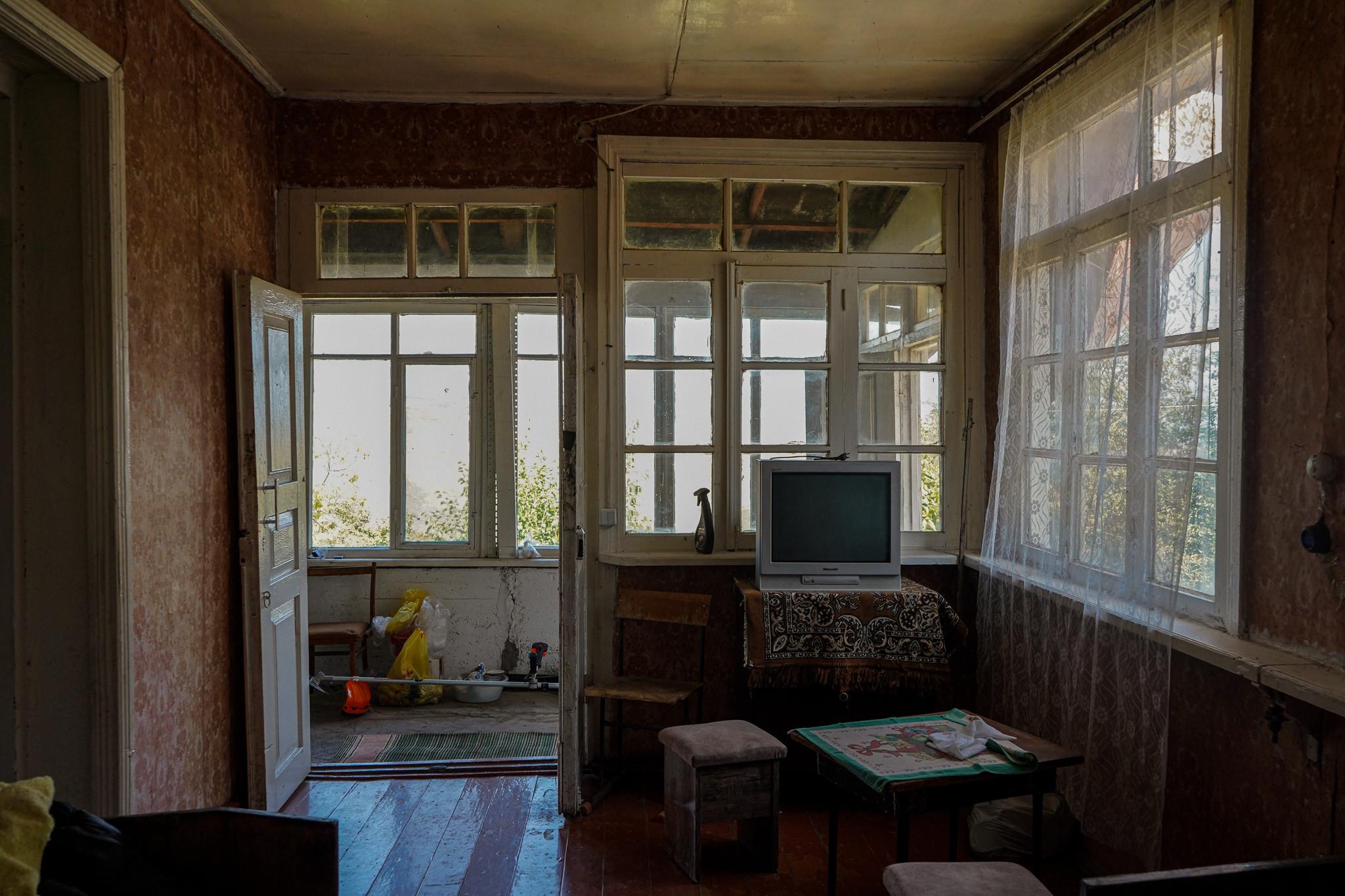
The mountains of Artsakh, where Mr. Dinunts grew up, are visible from his living room in Tegh, a village in Armenia’s Syunik Province. Azerbaijani military positions are two kilometres away. He arrived in 2023, having fled Stepanakert along with the rest of the Armenians of Artsakh.
He used to make shoes. He worked in factories in Stepanakert, then had his own workshop, a big workshop. He boasts, "I can make shoes from scratch." He had a car, a big house. "I don't even know where it is now. Let me look at the map. What's the new name? Khankendi. My house was a bit further on, near the factories. That's our factory, right there. That's my house."
He was born there in 1961. He went to school there, left for the Soviet army, then came back.
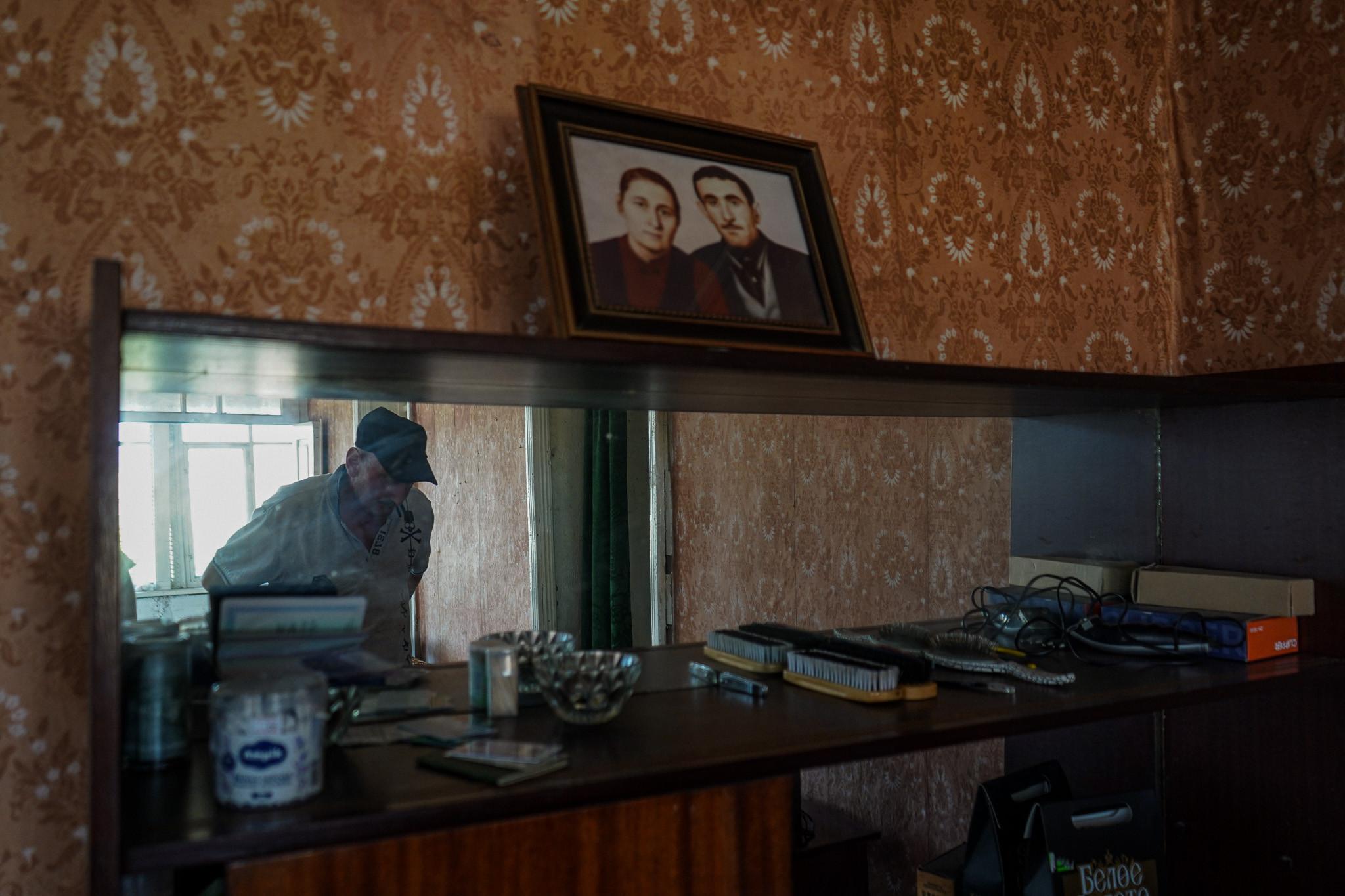
Then came the 1990s Artsakh war. "I was there like everyone else, like all the soldiers. I fought." He is proud to have come out of it a lieutenant. He displays his military ID and his war veteran's card in his living room, beneath the photographs of his parents.
On September 19, 2023, Azerbaijan launched its offensive against the republic of Artsakh. Within a week, the entire Armenian population, officially 115,000, fled and crossed the border into Armenia. Around 5,000 ended up in Syunik, the closest province and the least chosen. Of his departure, Mr. Dinunts merely says: "We left like everyone else, in columns, on foot."
A precarious life in Tegh
Mr. Dinunts cannot no longer carry anything. "The muscles don't work anymore. I can't even lift five kilos." He walks with a cane, with difficulty. He shows his legs the way you would show an object that no longer belongs to you. "These are my own legs, just no nerves. There aren't any."
He is not recognised as disabled by any government agency but for him the war is responsible for all these problems. "It made me an invalid. No home, no children, no wife, nothing."
Mr. Dinunts points to his head. "Nobody knows what caused my physical and head problem, maybe the war, the cold, the hunger. Anything could have caused it. The heart is because of the war. Health is because of the war. The war ruined everything. And it's not just me, you know. People in the nearby villages are sick too, I don't know why. But we survive anyway, we survive."
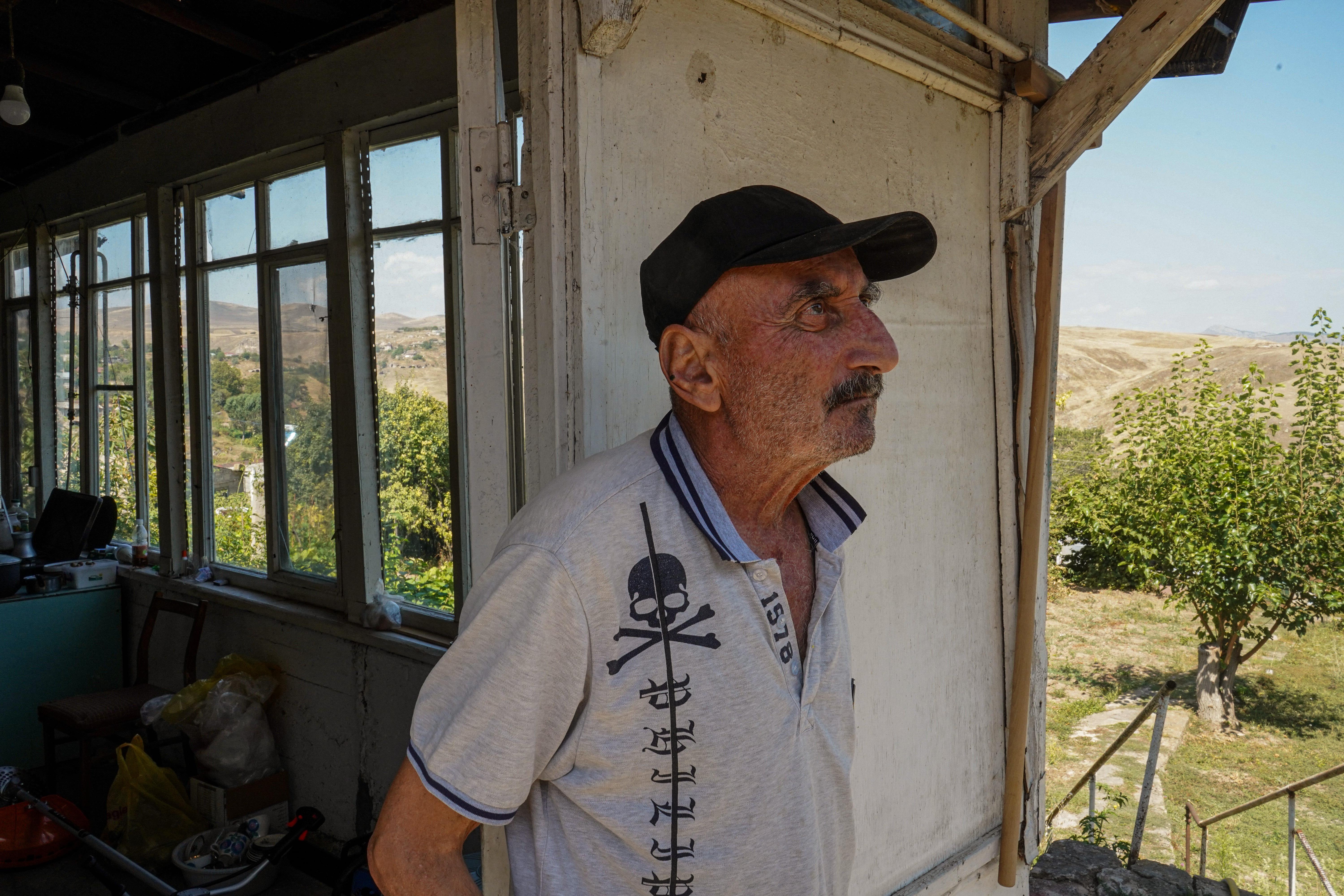
Winter is coming and Mr. Dinunts has spent his summer getting ready for it. He has brought in the firewood, bought potatoes, got two or three chickens and the grain to feed them. He carries the wood himself. "I don't usually ask for help." He admits: "We're proud people, after all."
His monthly pension is AMD 80,000 ($220).
"I hold onto it carefully, enough to buy firewood, grain, potatoes, to survive. Nothing else. Absolutely nothing. Now, I'm preparing for winter, to survive. I'm alive, still alive for now. I don't know what will happen next."
His friends from Stepanakert are scattered across Russia, elsewhere in Armenia, and as far as France.
"Our ancestors are there, the graves of five thousand eighteen-year-old boys, my father, my mother, my friends, my brothers, my sister. All the graves stayed there."
Yet he holds no ill will against anyone.
"Imagine, for thirty, thirty-five years we lived together, Armenians and Azeris. We ate together, slept together, served in the army together, and then suddenly, war. I did not want to fight, and my Azerbaijani friends didn't want to fight either. I don't blame them; I have no right to. I blame those on top, that's where it all started. It was a war between brothers."
He thinks about it every day.
"I know for certain, brother: by 2032 I'll be in Stepanakert. My heart feels it."
Hoping for a change in government
He says the notion is in his head, in his mind, and that it will happen when the government changes.
"Pashinyan hasn't done anything to help us here," Mr. Dinunts says, while posters of Pashinyan are put up fifty metres from his garden. When new politicians come in, he believes, that will be the moment.
"I'm here so that when they take Stepanakert back, I can run there on foot. I want to be close. I want to be the fastest to get there."
He opens the door of his house. "Go ahead, look. I have nothing to hide, nothing I can't show you."
All he has is what he bought with the money he was given when he arrived, and he is tired of moving from place to place, of being a tenant. He wanted to fix the roof.
"But I'm asking you, I'm really asking you, if you came here as a human being: find a way to help me,” Mr. Dinunts adds.
"From my window I look at nature, you can see the mountains of Artsakh from here. That's what calms me down. Sometimes I sit and look at those mountains, and it brings a bit of peace. It's the same air as in Artsakh."
Write a comment