 Videos
 Photos


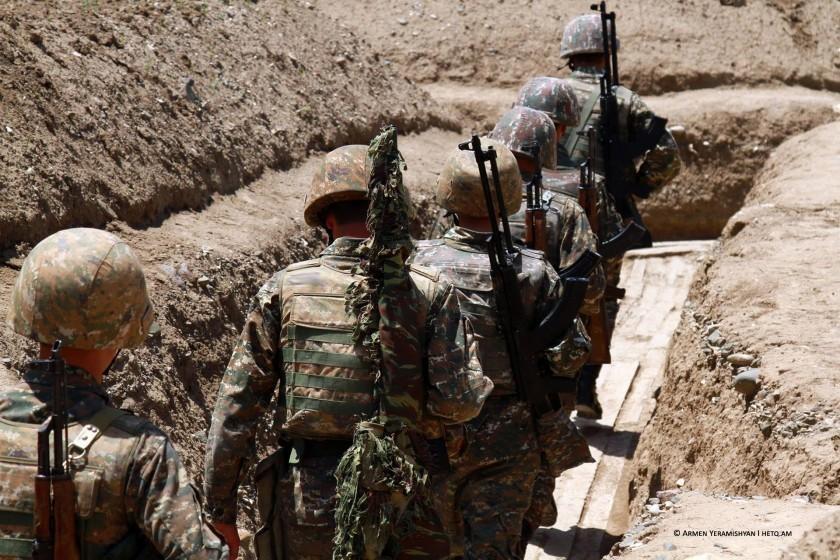
Armenia’s Military Service Payment Exemption Scheme: Potential Repatriates Voice Concerns
Tigran Movsesyan, 29, lived in Russia and then moved to Armenia in 2022 following the outbreak of war in Ukraine.
He married in Armenia and wants to become a citizen of the country.
What Movsesyan and other potential repatriates face is the issue of military service and a new law requiring those who haven’t served in the military to pay upwards of AMD 15 million (US$40,000) to get service exemptions.
Amendments to the Law On Military Service and Status of Servicemen, adopted in February of this year, would allow citizens aged 27-37 who have not completed compulsory military service to be exempted from criminal liability by choosing the duration of their service and the option of paying for it.
The law proposes the following options:
- serve 24 months without pay,
- serve 12 months and pay 2.5 million drams,
- serve 6 months and pay 5 million drams,
- serve 1 month and pay 10 million drams,
- pay 15 million drams and be released from service.
Until the last amendment to the law, there was no mechanism for exemption from compulsory military service in exchange for a lump sum payment under Armenian legislation. The law allowed citizens who had reached the age of 27 and evaded service to be released from criminal liability by paying a fine. It was calculated as follows: 100,000 drams for each missed draft.
Movsesyan believes the new payment scheme will make those wishing to move to Armenia think twice.
“When I came to Armenia, I was twenty-six. I thought I would wait one or two years before sorting out my citizenship issues. But that year, the law was adopted, which established options: either serve or pay,” he tells Hetq.
Movsesyan, a graphic designer, collaborates with foreign companies. He fears not having a job after serving a two-year stint in the army.
“It turns out that having citizenship becomes a paid affair. If you have money, you will pay and be released, as before, if not, you will have to serve. But many people simply will not come to Armenia given this situation. My parents left their homeland for several reasons. Many young people like me have grown up, become adults, and decided that they need to live in their homeland. But it’s not easy. A person is forced to drastically change their life at the age of 30-35, when everyone is already established, has a career and a family,” Movsesyan says.
Thirty-year-old Ararat Minasyan is in the same boat.
Born and educated in Moscow, he moved his family to Armenia in 2022. When he tried to arrange his documents for registration and legal status, he was surprised to learn that he was already considered a citizen.
“When I went to register, they told me they couldn’t help because I was already a citizen. When I asked how, if I was born in Moscow and my passport is Russian, they replied that since my parents were citizens of Armenia at the time of my birth, I am also considered a citizen,” he says.
Minasyan says employees at the passport office told him t that he must first obtain an Armenian passport, which implies serving in the military.
The young man bemoans the bureaucratic rigmarole he faces in his quest to gain legal status in Armenia.
“It’s a closed circle. For example, to renounce citizenship, you must first become a citizen, have a passport, but they tell me that I am already a citizen, I don’t have a passport, but if I had one, I would have to serve. I’m thirty years old. I have a family, a child, and loans. Now they tell me I either must serve in the army for two years, or pay some 15 million drams,’” Minasyan tells Hetq.
As a Russian citizen, he must leave and return to Armenia every 180 days to remain legally in the country. His wife and child have received Armenian citizenship.
Minasyan says while would like to live and work in Armenia, pay taxes, and raise his children here, he is forced to continue working for foreign companies and pay taxes abroad. Those that do are generally exempt from military service.
“I worked twelve to thirteen hours daily to buy a house in Moscow with a mortgage. But I don’t have the means to pay fifteen million drams. If I serve in the military, who will pay the mortgage on my house, feed my family? They tell people to return to your homeland, but there are no favorable conditions for living in your homeland,” he says.
Minasyan says people in such a situation often don’t understand what options they have. Despite the difficulties, he intends to live in Armenia.
Armen Safaryan, 25, was born in Moscow and graduated from the Civil Aviation Institute with a pilot’s degree. Immediately after graduating, he decided to move to Armenia to continue his professional activities.
Safaryan says he started trying to find a job while still a student, sending emails to Armenian airlines. However, he received almost no responses. After moving to Armenia, he applied to several companies, but to get a job, he needed Armenian citizenship with the appropriate documents and a social card.
An Armenian Social Card (Public Services Number or PSN) is a mandatory 10-digit identification number required for residents and citizens to access services like banking, employment, taxes, and healthcare.
At the passport office in Armenia, he was told that he could not get a social card with a Russian passport.
“They saw my Armenian surname and started checking my parents’ data. It turned out that my parents were citizens of Armenia at the time of my birth, and accordingly, I am considered a citizen of Armenia. That is why I cannot get a social card with a Russian passport. I need to get an Armenian passport,” he says.
An Armenian passport also means military service obligation. Safaryan served in the Russian armed forces. During his studies, he participated in military training programs, passed training, and received the rank of reserve officer.
Safaryan has been to five passport offices in different regions of Armenia. He notes that citizens of other countries easily received social cards.
He temporarily worked as a waiter in one of Yerevan’s cafes. However, working as a waiter was not attractive for Armen, who has a pilot’s degree. He applied to the Armenia’s Civil Aviation Committee and was invited for an interview. When they heard that he was a Russian citizen they told him that a foreign citizen cannot work in a state institution in Armenia.
In the end, Safaryan decided to move to the United Arab Emirates and now lives in Abu Dhabi. He says that he was ready to serve in Armenia’s military if a more flexible solution was offered. He believes this issue should receive broader legislative regulation, without additional payment obligations.
“Many countries have laws on repatriation that facilitate the return of representatives of the diaspora. We have a large diaspora, but there are almost no such mechanisms,” he tells Hetq.
Lawyer Norayr Norikyan says the recent amendments to the Law On Military Service and the Status of Servicemen are an attempt to solve the problem of those who evade military service, but new risks may also arise, especially from the point of view of repatriation.
Norikyan says the Armenian parliament has tried to propose a legal mechanism for those who, for various reasons, have not served and risk of criminal prosecution. The lawyer says the state, with this amendment, is telling people that it is willing to close the issue of criminal prosecution against them, but in return, they must either serve or pay.
Norikyan emphasizes that the proposed options, especially high payments, can cause a problem of social inequality, when some can pay for exemptions while others cannot.
Nevertheless, the lawyer doesn’t view the new amendments as discriminatory, but rather as a list of options that citizens can choose from.
Norikyan believes it is also necessary to assess whether the established amounts are comparable to the actual cost of military service. “The state should calculate how much is spent on one serviceman over eighteen months and compare this with the established payment options,” he says.
Norikyan believes the long-term solution to the problem is the formation of a professional army in Armenia. “If we have a professional army, those people who actually want to become military personnel will go to service, and the level of evasion will significantly decrease,” he says.
He emphasizes that every case should be considered individually.
Photo: archive
Write a comment