 Videos
 Photos


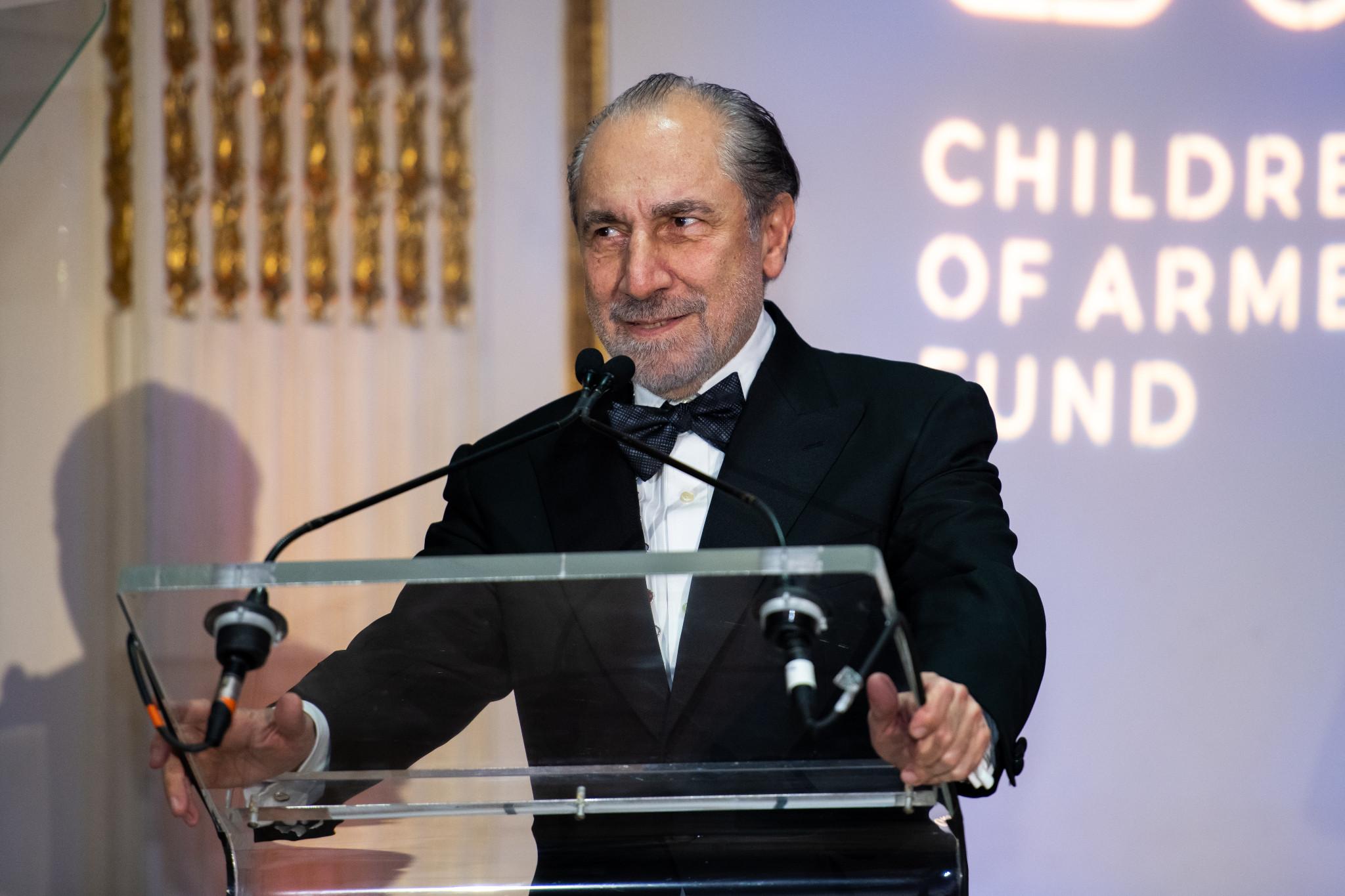
COAF Founder Garo Armen Critiques Letter Penned by Afeyan and Others on Church-Government Conflict
Garo Armen, founder of the Children of Armenia Fund (COAF), has issued the following statement that pushes back on a recent statement issued by Noubar Afeyan, Anthony Barsamian and others criticizing the Armenian government for what they describe as "persistent attacks on the Church leadership", warning that such actions "pose direct threats to all Armenians around the world who rely on the Church for spiritual sustenance." Armen also takes issue with the authors' claim that "the Armenian government’s approach is risking severing its relationship with the diaspora – something not even the Ottoman Empire or the Soviet Union were able to do."
An open letter published by Mediamax and promoted as the voice of “diaspora leaders” warns that Armenia is risking a rupture with the diaspora and urges Armenians abroad to pursue “political remedies and legal actions” through host governments in response to the current church–state confrontation.
That framing is misleading, and that prescription is dangerous.
The Armenian Apostolic Church is not a building and not a hierarchy. The Church is the people. Armenian history makes that plain: ordinary men and women carried faith and identity through genocide, exile, repression, war, and loss. Institutions survive only when they serve the people who sustain them. When the burden flows in only one direction—upward—faith turns into weight. That is why renewal and accountability strengthen the Church; they do not weaken it.
It is also necessary to speak plainly about representation. The diaspora is not a committee. It is millions of Armenians across dozens of countries, with different experiences, politics, and priorities. A small circle—however prominent—does not speak for the whole. Many diasporans supported Armenia’s democratic transformation and the long-overdue effort to dismantle state capture and corruption. Others opposed that change from the first day, and some have repeatedly aligned themselves with political elements within the Mother See to stand against the post-2018 government and its reforms. The present letter reads less like a national warning and more like the continuation of that longstanding political project.
The letter’s most inflammatory comparison—suggesting Armenia is approaching a rupture “not even the Ottoman Empire or the Soviet Union were able to do”—should never have been written. Those regimes attempted to erase Armenians. The Republic of Armenia is a sovereign state with an elected government, political pluralism, and a constitutional order. Dragging genocide memory and Soviet trauma into today’s political combat is not moral clarity; it is moral vandalism.
The call for diasporans to enlist foreign governments for “political remedies and legal actions” is equally misguided. Diasporans have every right—indeed, an obligation—to advocate for Armenia’s security and future in the countries where they live. But internationalizing Armenia’s internal disputes in this way turns diaspora communities into instruments of pressure against the Armenian state. It undermines sovereignty, deepens division between homeland and diaspora, and hands leverage to forces that do not wish Armenia well. Armenia’s destiny cannot be negotiated in foreign capitals by self-appointed representatives.
This moment also requires honesty about the state Armenia inherited. After independence, Armenia endured decades of systemic corruption and institutional decay. That legacy weakened the state, hollowed out public trust, and left the country vulnerable. The 2018 democratic breakthrough was a turning point: the public demanded a government accountable to citizens rather than to entrenched networks. That work remains unfinished, but the direction has been clear—greater accountability, greater transparency, greater public ownership of the state.
No one forgets the devastating war with Azerbaijan and the tragedy that followed. The pain is national and permanent. But the roots of that catastrophe extend beyond any single year or administration: decades of strategic neglect, complacency, and misgovernance left Armenia and Artsakh dangerously exposed. Armenians paid the price in blood. That history cannot be rewritten to protect reputations.
Since then, Armenia has operated under extreme regional pressure and hostility from Azerbaijan and Turkey. In that environment, the government led by Prime Minister Nikol Pashinyan has pursued a difficult, imperfect, but vital course: strengthening state institutions, widening Armenia’s diplomatic and security options, and pushing toward a framework that reduces the risk of recurring war. Armenia is now engaging with major power centers and regional partners in ways that would have seemed unimaginable for a small, isolated state not long ago. That does not make challenges disappear, but it does create space for stability and for prosperity—something Armenia has rarely had the chance to pursue since independence.
Against that backdrop, the attempt by a narrow group to present itself as “the diaspora,” to cloak a political agenda in religious language, and to urge external pressure campaigns against Armenia’s elected government is not nation-building. It is factionalism dressed as virtue—often entangled with personal, institutional, or financial interests that are not disclosed and not neutral.
Armenia needs a strong state and a strong Church. Both are possible—together—when leadership is credible, when institutions are accountable, and when politics does not hide behind vestments. Faith should not be used as a weapon against democratic legitimacy. The Church should renew itself through integrity and reform, and the state must uphold the rule of law and protect freedom of worship without allowing any institution to become a parallel political authority.
The diaspora’s highest duty is not to escalate internal Armenian conflict. It is to strengthen Armenia—by investing, building institutions, supporting education and resilience, helping displaced families, modernizing capacity, and backing the hard work of reform rather than sabotaging it from afar.
Armenia is not a stage for old power struggles. The Church is not a throne. The diaspora is not a lever to be pulled against the Armenian voter. A Church carried by its people must carry them back. A state liberated from corruption must be defended—not weakened—by Armenians everywhere".
Garo H. Armen, PhD
Chairman and Chief Executive Officer, Agenus Inc.;
Founder and Chairman, Children of Armenia Fund (COAF)
Write a comment