 Videos
 Photos


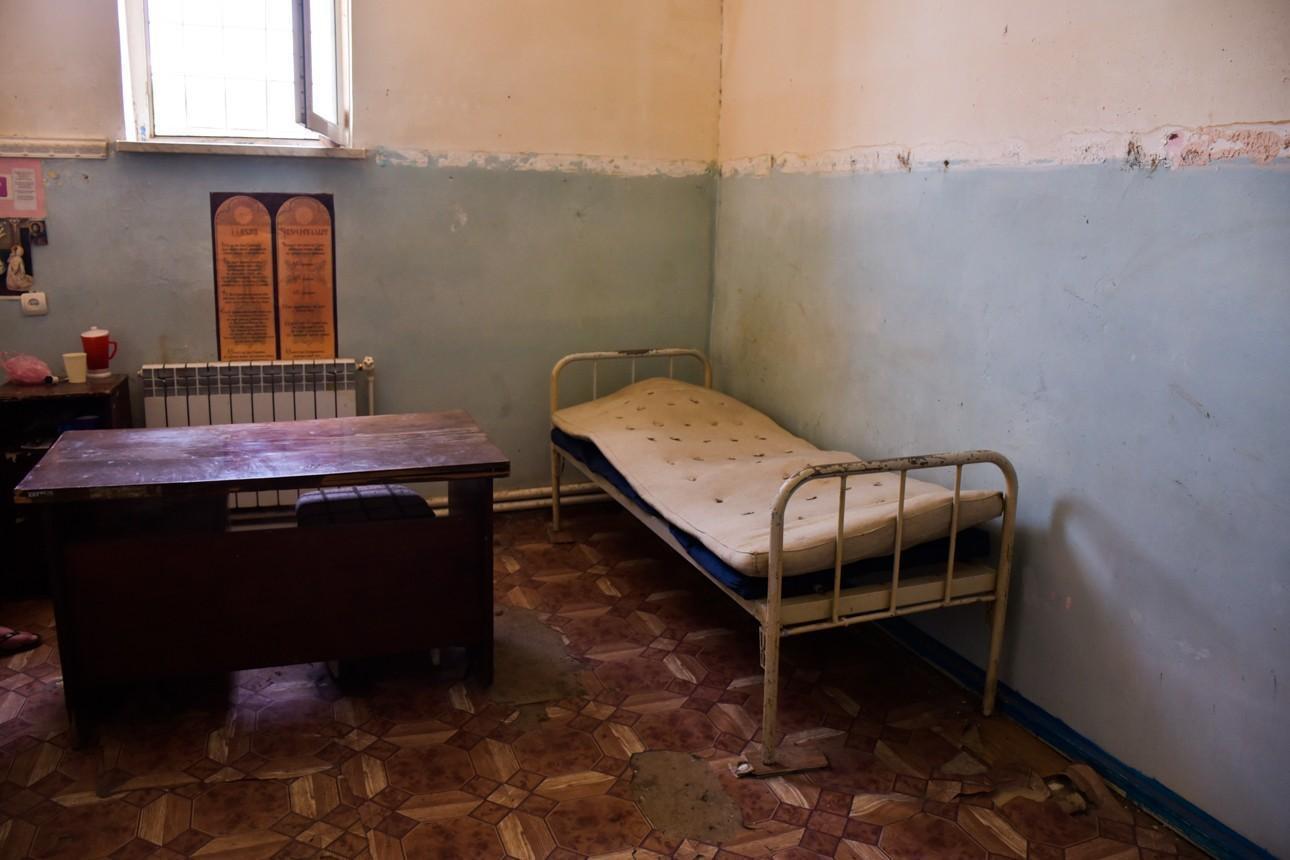
Suicides Surge in Armenia's Jails; Public Monitoring Group Raises Alarm
Shushan Khnkoyan, a member of the public oversight group for penitentiary institutions in Armenia, is concerned about the growing number of suicides and and suicide attempts in the country’s jails.
Eight suicides were reported in 2025, when compared to none in 2024. Sixteen biological deaths were reported in 2025, compared to twelve in 2024.
Suicide attempts have also increased. In 2024, fourteen people (nineteen cases) attempted suicide. In 2025 twenty-six people (46 cases) took the extreme step. Here too, the picture is worrying since the increase in people and cases shows that some attempted suicide more than once.
The Public Oversight Group (also known as the Group of Public Monitors) acts as the main independent watchdog for penitentiary institutions under the Armenian Ministry of Justice, conducting regular inspections to monitor human rights, prisoner conditions, and healthcare access. This group of NGOs, which reports on issues like overcrowding and abuse, plays a crucial role in promoting transparency and accountability.
In 2025, 183 people in prison committed self-harm (in 2024: 205), and the number of self-harm cases was 617 (in 2024: 626). This means that sometimes the same person committed more than one self-harm.
202 convicts and detainees went on hunger strike in 2024 based on a variety of complaints, down from 298 in 2024.
Khnkoyan tells Hetq that such high rates were seen ten years ago, followed by a downward trend that has reversed of late.
She says that most of the alerts the monitoring group received in 2025 related to medical care.
“Medical care for people is incompletely provided. The service is not conducted properly. The serving of sentences by those with diseases incompatible with punishment is also a serious problem, they continue to be in a penitentiary institution,” says the expert.
Khnkoyan says there are cases when the health condition of a person held in prison is serious, but the disease is not included in the list of diseases incompatible with punishment. Bureaucratic hassles also prevent the sick from receiving urgent medical care on the outside, leading to death in a penitentiary institution.
Khnkoyan says that most who have committed suicide have mental health issues and believes it is necessary to conduct an in-depth analysis to understand the whole picture.
“I focus on those with mental health problems because they do not receive proper medical care in penitentiary institutions. They are mainly provided with sedatives, which cannot be considered treatment,” says Khnkoyan.
Armenia closed its standalone "Convicts’ Hospital" (formerly under the Ministry of Justice) in October 2025, and is transitioning inmate medical services to a new, licensed medical subdivision within the Armavir Correctional Facility. This shift aims to provide more efficient, on-site care rather than separate, centralized hospitalization.
The monitoring group welcomes this step but still has concerns. Khnkoyan says six or seven convicts and detainees are in the mental health center, while the others are still held in penitentiary institutions.
"We still receive calls that people in penitentiary institutions do not receive proper medical care. Thus, if individuals clearly need professional treatment, they do not receive that treatment, which leads to self-harm. After one or two such attempts, they commits suicide," says Khnkoyan.
Write a comment