 Videos
 Photos


Are You Really Armenian? Discovering Identity Through a DNA Kit
By Sona Karamyan and Milena Mirzoyan
Anna Simonyan, a twenty-year-old web and graphic designer residing in Valencia, Spain, thought she was ready to open the long-awaited email and see the results that would confirm something she has known all along - she was Armenian.
She did not hesitate or feel any strong excitement while waiting. But the MyHeritage app had a surprising response for her: she was 36.9% Greek Albanian.
DNA tests - also known as genetic ancestry tests - have been around for many years but gained popularity only after the spread of the internet and social media. More people now want to see where their ancestors came from. There are thousands of internet videos of people sharing their results. Armenians are part of this growing trend.
For Armenians, this trend is more than just an outburst of curiosity. “It is my pride to be an Armenian,” says Alisa Sargsyan, 20, a student from the American University of Armenia in Yerevan, who took the DNA test.
“I wanted to prove my belonging through my blood, as well as my heart and mind.” She was born and raised in Armenia. There was no doubt that Armenian heritage would dominate in her DNA.
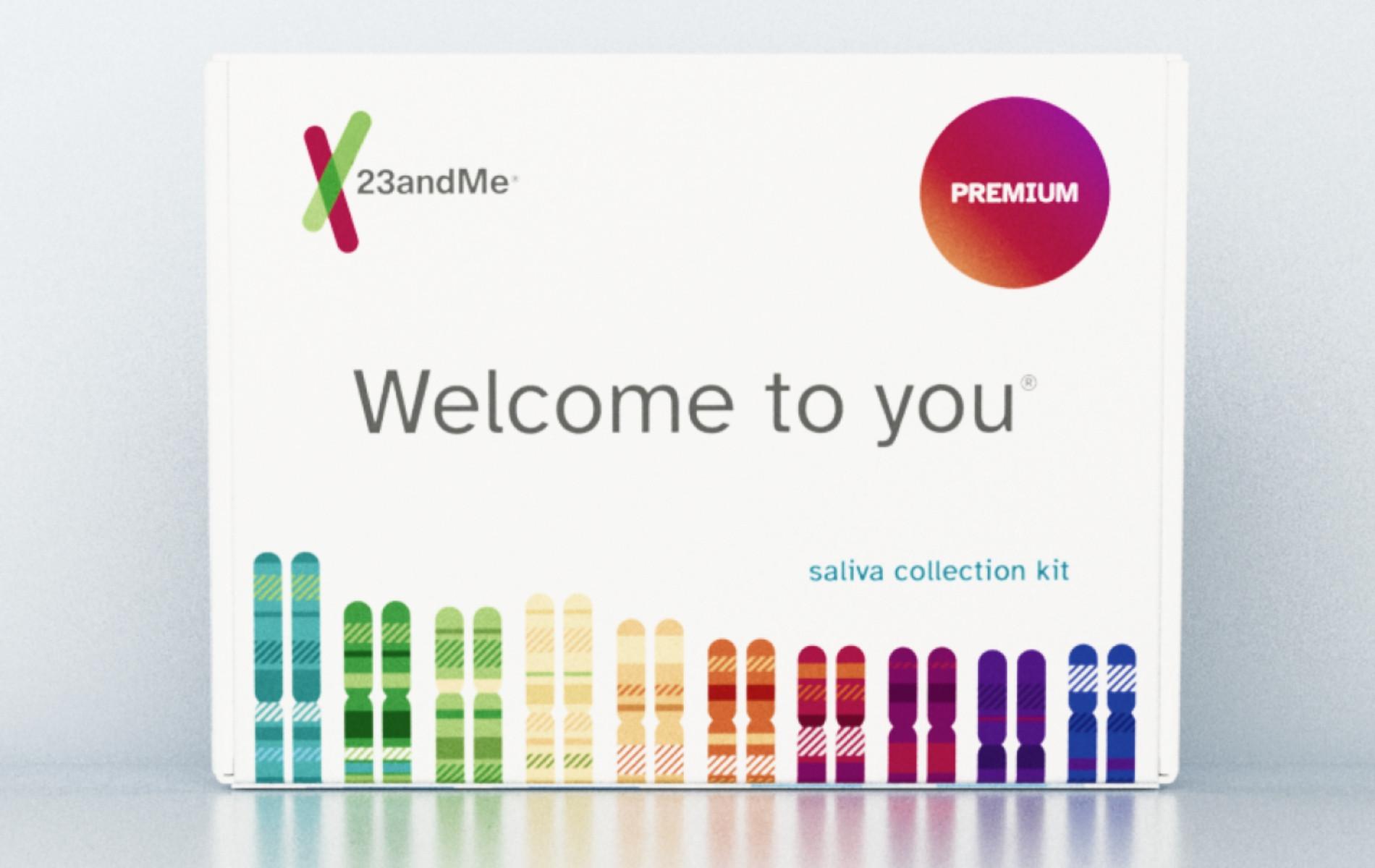
Alisa ordered the 23andMe test kit and sent the sample of her saliva to the lab to be checked. The results arrived one month later revealing that she was 72% Armenian, 27% Iraqi Arab, and 1% Central Asian. While not fully Armenian, yet she knew that Armenian blood made up the biggest chunk of her ancestry and that’s what mattered.
Ancestry testing heavily relies on databases that a certain lab or commercial organization has - the most popular companies worldwide being MyHeritage and 23andMe.
“We offer the most accurate and scientifically rigorous genetic ancestry analysis available today,” says Catherine Afarian, a press officer at 23andMe. This organization has over fourteen million members and ensures maximal accuracy in distinguishing Armenian roots. The kit costs $99. The price of the MyHeritage kit is $89.
All DNA ancestry tests are based on “markers” and their variation frequencies among diverse groups of people that have formed because of global migration.
“Markers” are sections of human DNA that have many variations. These variations appear in different frequencies from one group to another. A certain variety of the mark can be more frequent in one ethnic group than in another. This frequency difference is what helps to identify one’s ethnicity. Since humans originated in Africa, people from this continent and specifically from South Sahara have the highest variations in these marks. Indigenous peoples have the least variation because migration and colonization did not affect them for a long time.
Modern geneticists can look for over 750,000 marks in human DNA with each of their variations and their frequencies. Then, these frequency results are matched with the results of people who are present in the database of the given commercial company.
“The comparison is between you and living people. It’s not between you and dead people,” says Graciela Cabana, an anthropological geneticist from University of Tennessee. “I would rather call it a genetic affinity test because it's looking for affinities based on those markers between you and people in the database,” she says.
Having a long history of massacre, migration, and conquest, it is not surprising that Armenians have a unique DNA pattern that depicts all these historical developments. However, this history made preserving Armenian identity essential for the nation's survival.
“I expected to be maybe 30–45% Armenian,” says Anna. Her parents come from Yerevan and Noyemberyan, Armenia. One grandfather on her mom’s side and great-grandmother on her dad’s side were Russian. The rest, she thought, were ethnically Armenian. The results showed 36.9% Greek and Albanian, 15.7% Southern Italian, 12.5% Eastern European, 6.1% Baltic, 3.9% Balkan, 2.5% Northern Italian, 10.5% Georgian, 8.0% Turkish, and only 2.8% Armenian.
“For me, this test wasn’t about redefining my nationality. It was about understanding how my ancestors mixed and migrated over hundreds and thousands of years,” she says.
Anna saw her results as a fact but not as a basis to change her “Armenianness.” She grew up knowing who she was and there was nothing that could change that for her. “Nationality is about culture, language, and family,” she says. Though born in Russia, she always visited Armenia and even launched her Armenian custom clothing brand called SEVAN. She feels very connected to Armenian culture and regards Armenia as her homeland.
DNA test accuracy is not guaranteed since results are based on comparison. Much depends on the database of the company. The richer the database from that area, the more precise the results. Besides, ethnic categories such as “Armenian,” “Georgian,” or "British" are strictly cultural.
“If they research Georgia, they also include the Akhalkalaki region and consider locals as Georgians not Armenians or representatives of other nationalities,” says Inessa Arshakyan, a product marketing manager living in Barcelona who took the test. Her results did not match her expectations. She was 33.6% Georgian, 27.3% Persian and Kurdish, and only 18.7% Armenian. She was unsure about the accuracy of the test and relied on her knowledge about herself and her family.
“I was and am Armenian,” she says. Nothing shook her national and cultural identity. She recommends the test only to people who are looking for relatives and who have a strong identity - analyzing skills.
23andMe relies on Google Maps API, which uses present-day boundaries rather than historical regions such as western Armenia and this causes many Armenians from that region to be identified as both Armenian and Eastern Turkish.
“We recognize how important it is for Armenian customers, and many others whose ancestral homelands were partitioned or renamed, to see their identity better reflected. Our research, reference panels, and computational approaches are actively evolving, and West Asia is among the regions we are prioritizing for increased precision and historical context,” says Afarian.
Companies put a lot of effort into and do a lot of research to achieve more precise results. This does not mean that the test takers will see them as accurate or trustworthy.
“People accommodate the answers to what they already believe,” says Cabana based on her research of the citizens of Argentina. They choose to ignore what they do not want to see. This is also a coping mechanism which helps to avoid the identity crisis that comes with the unexpected DNA results. It is hard to say whether it is a problem or not.
“No actual ancestral populations can be sampled, assumptions about pure ancestral groups are unrealistic, true non-admixed populations do not exist,” says Anahit Hovhannisyan, a molecular population geneticist from Trinity College, Dublin. DNA tests need to be approached with a level of caution. “Once there is an update of a reference panel, the results could change,” says Hovhannisyan. Results can vary depending on the company and its reference panels.
“The results were interesting, but they didn’t affect the way I feel about my Armenianness,” says Alissa. Inessa and Anna agree.
(Sona Karamyan and Milena Mirzoyan are journalism students at Yerevan’s AUA)
Write a comment